Weekly Wrap: CLARITY Act Lost Momentum But Crypto Advanced

- The CLARITY Act’s momentum collapsed this week, ending with Hawley’s defection and warnings of a midterm-driven stall.
- Institutional infrastructure kept expanding despite the regulatory gap, led by Circle, Ripple, and a major European merger.
- Bitcoin’s institutional flows stayed strong even as broader sentiment stayed cautious.
The story that mattered most this week wasn’t a single headline, but a pattern that took five days to become obvious. The CLARITY Act, crypto’s best shot at comprehensive US market-structure law, went from a bill with momentum to a bill without a floor vote, and almost nobody outside the sector noticed the industry had already started building around it.
That pattern started early in the week, when one of America’s most publicized crypto bills lost four of its core champions, signaling the first cracks in Congressional support. By midweek, the picture sharpened with the CLARITY Act Deadline, Putin’s new crypto law, and an EU move looking to enact tighter rules for crypto players.
Then came the pivot, with Coinscipher covering the silent moves the regulators, SEC and CFTC, are making in building crypto rules, independent of whatever Congress did. By Friday, the market was treated to the news that Josh Hawley had become the first GOP Senator to oppose the crypto bill, making the stall official from the inside. The reaction of the sector was apparent, starting with OKX Executive Haider Rafique, warning that the CLARITY Act could stall amid midterm politics.
Read in sequence, these five stories aren’t five separate events. They’re one story about a bill losing altitude in slow motion, told from five different vantage points.
Security Had Its Worst Week of the Quarter
Nothing tested the industry’s self-reliance quite like the Coldcard situation. It started as a single-incident story, ‘Coldcard’s $114M Hack May Trace Back to Its Own CTO,’ then escalated fast, as the exploit largely remained uncontained. By week’s end, losses had topped $130 million, with more attackers joining in showing that the flaw had gone from one group’s exploit to an open opportunity anyone technical enough could act on.
That wasn’t an isolated bad week for one wallet maker. Coinsciper had initially covered that losses from violent crypto attacks had already topped $30 million in 2026, with France leading. Adding a scam-fraud angle to the same basic theme were reports that Hong Kong was battling the Fun Coffee Scam that had caused losses to the tune of HK$104 million.. Same week, Bybit filed a lawsuit against North Korea and froze stolen crypto, signaling a crypto exchange deciding it couldn’t wait on any government to act and went to court itself.
Four different threats, four different responses, and a common thread none of them addressed alone: when institutions or individuals get hit, they’re increasingly handling it themselves rather than waiting on regulators or law enforcement to catch up.
Institutions Built Anyway
While Washington argued and Coldcard users scrambled, the infrastructure side of the industry had one of its busier weeks in months. Circle Arc Mainnet announced it will go live on September 16 with a Wall Street validator lineup locked in a launch date with BlackRock, Visa, and DTCC attached as validators.
The merger of Europe’s two established crypto operators, Boerse Stuttgart Digital and Tradias, showed the same appetite playing out across the Atlantic. The merger could welcome renewed confidence in the sector, as regulated entities search for legitimate operators to work with in their crypto pursuits. The week also signaled Ripple’s growing ambition, with an expansion of its own infrastructure and a release of a new version of its software, v3.3.0. These added protocol-level evidence of the same push toward institutional-grade tooling and privacy features.
Tokenization got a new boost as Dinari put its entire S&P 500 on the blockchain. The move showed that tokenization projects are no longer pausing for regulatory clarity. Instead, they are building the product and waiting for the rules to catch up.
However, the one exception worth flagging was Nasdaq’s QBTC Bitcoin Options, which were delayed as CME challenged regulatory approval. The tussle reminded players that not every institutional push moves in a straight line. Even inside the “building anyway” story, competitors are still fighting over who gets to build what.
Ethereum Argued With Itself
A narrower but persistent thread ran through Ethereum’s week specifically, the Ethereum reward cut Proposal (EIP-8361), which ended up splitting Devs and DeFi, amid fight over Ethereum’s own staking economics. While ETH made noticeable gains amidst the noise, a potential rise above $2,000 remains a contestation. Coinsciper covered this in detail, highlighting that unresolved staking debate will continue to influence where the price of the second largest crypto goes next. The debate is now one to watch, with the network’s own researchers and its most prominent DeFi builders publicly disagreeing about what Ethereum’s monetary policy should even optimize for.
Bitcoin Kept Accumulating Quietly
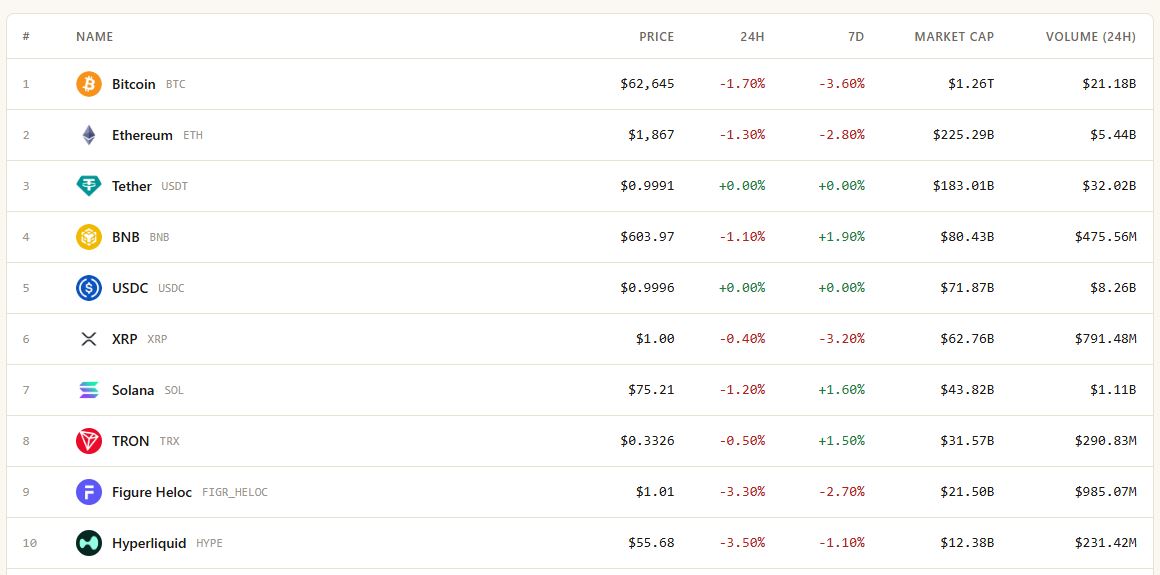
Set against the noise elsewhere, Bitcoin’s institutional story was almost boring by comparison, and that’s arguably the point. Bitcoin ETFs saw inflows rise by $626 million in 3 Days, while a large Whale just cut their short position after a trigger of stop-losses. The news points to the same underlying condition: real capital is still moving in and out of Bitcoin at a meaningful scale regardless of what’s happening in Washington or on hardware wallet forums.
The market also signalled something complementary. That BitMine was just one purchase away from owing 5% of all Ethereum, while Trump Media’s Bitcoin Treasury Down had narrowed down to loan collateral. The news added two very different corporate treasury stories to the same basic theme, institutions still treating crypto holdings as a strategic asset even in a choppy month.
What It Adds Up To
Put the five threads next to each other and a single shape emerges. Congress spent the week losing ground on the one piece of legislation that would have given the industry legal certainty, and almost nothing else in crypto slowed down to wait for it.
Regulators kept writing rules. Circle, Ripple, and a pair of European exchanges kept building. Bitcoin’s institutional buyers kept buying. Even the industry’s response to its worst security crisis of the year, the Coldcard exploit, was handled through firmware updates and direct legal action rather than any regulatory intervention.
That’s not necessarily a story about resilience. It’s a story about a gap. The people building infrastructure and the people writing law are operating on completely different clocks right now, and this week made that gap harder to ignore than it’s been in months. Whether that gap closes or widens further is genuinely an open question heading into next week.
What to Watch Next Week
Congress’s August recess is now the deciding variable. Whether the CLARITY Act finds new momentum once lawmakers return, or whether Hawley’s defection turns out to be the first of several, will shape how much longer the industry keeps building without a legal framework underneath it.
On the security side, watch whether Galaxy Research’s Coldcard loss estimate climbs past $130 million or starts to plateau, since that answer says a lot about whether the exploit is finally under control. And on the Ethereum side, EIP-8361 remains an open draft. Whether it gains real traction toward inclusion in a future upgrade, or quietly stalls the way several ambitious Ethereum proposals have before it, is worth tracking in next week’s coverage.